
Ending Money Fights With Your Partner
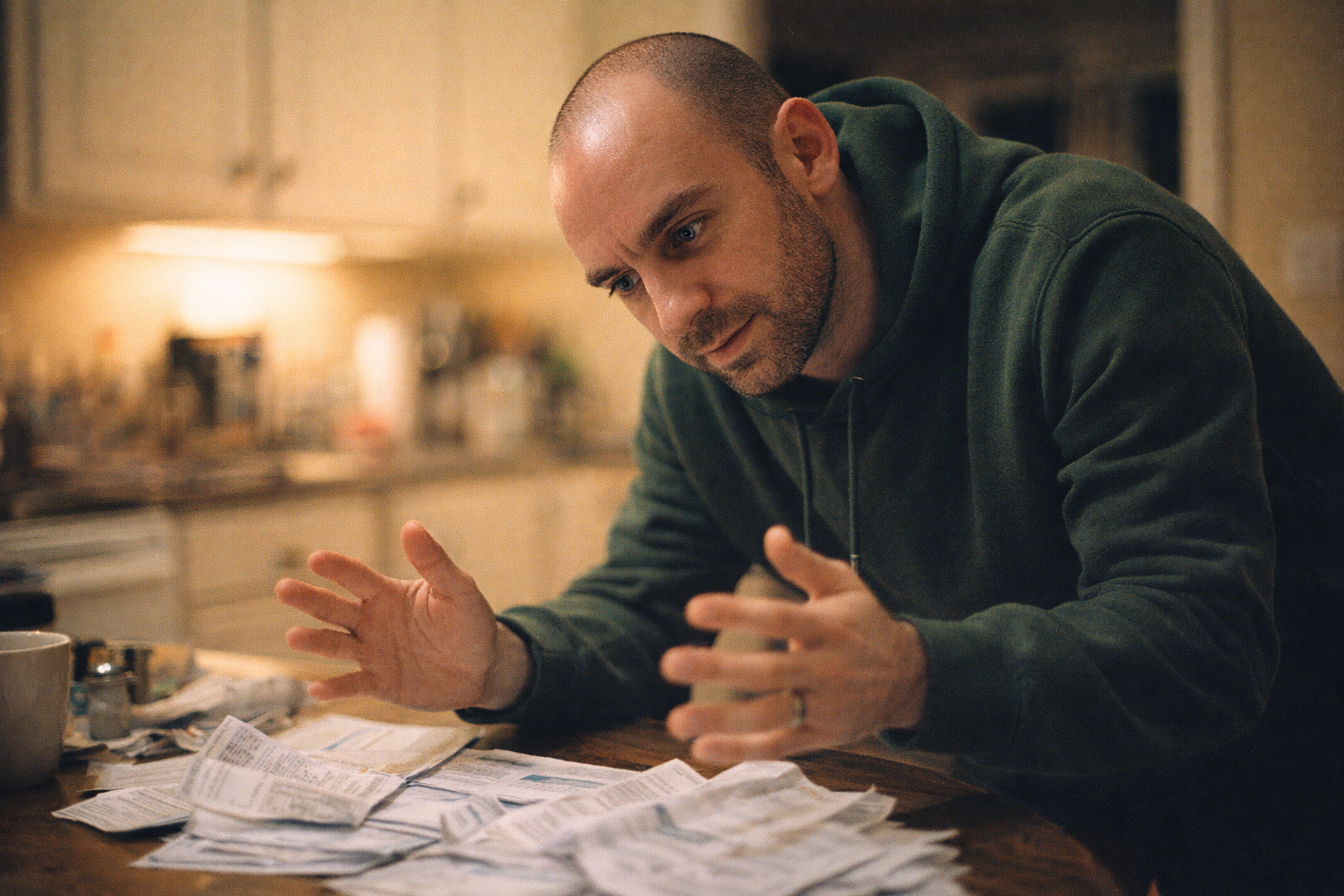
The biggest cause of fights between me and my beautiful wife, Mollie, over the years has been money. And the fights were genuine and more intense than our typical disagreements— so this isn’t something I’m downplaying.
When you think about it, it’s not really surprising. Money is a deeply personal issue that’s wrapped up in our identity and our values. Not only that, but money matters have real life consequences, and that creates friction for you and your partner to rub against each other.
Of course, it doesn’t have to be that way. Mollie and I have improved quite a bit in this area. We still get upset at each other over financial matters, but it doesn’t escalate as quickly, and we don’t stay mad as long.
In my observation, a lot of the tension around money is hidden below the surface. We don’t know why we’re frustrated, and we only figure it out in the midst of a tense argument. I’ve learned to diffuse these arguments by gently teasing out the real issue before it becomes a problem.
Here’s a list of the most common financial tensions between Mollie and myself over the past decade
Hopefully by seeing our list, you can reflect on whether any of these apply to you and your partner.
One person feels the other is too controlling
In a great relationship, money management is a team effort.
It’s completely fine for one person to play a bigger role, as long as the other is kept in the loop and has a chance to offer input. Failure to do this makes the person with less involvement feel marginalized and underappreciated.
One person feels judged by the other’s spending choices
Maybe you and your partner have different ideas about how you should be spending your money. One of you thinks the other is too stingy. Or one of you thinks the other is too reckless.
These differences in philosophy can lead to tension if you let them continue to build up.
One person wants more say in the big-picture plan
Sometimes the person who takes more responsibility on a day-to-day basis with finances starts to think of the money as their money. They end up making bigger and bigger decisions without consulting their spouse. In a healthy relationship, all sides should feel like their input matters and is appreciated.
One person doesn’t have the same access or visibility
Similar to feeling left out of big-picture plans, you might feel like you don’t even know how much money you have or how well or poorly you’re doing.
If your spouse isn’t keeping you involved, then it’s natural to feel like you’re being kept in the dark, and maybe not being fully trusted with what you do know.
One person has more responsibilities and feels unappreciated
The person who manages the money may actually be the source of the tension. It’s easy to feel like you are shouldering more of the burden in your relationship than your partner.
Maybe you think they’re spending money too frivolously for the budget you’re dealing with and that they’re just taking advantage of you.
One person resents the other person’s job
Money isn’t just what you spend— it’s also what you make. And while money isn’t everything, how much money you make can alter your lifestyle and the options available to you.
Are we going to take that vacation? Get a new car? Pay for our kid’s college? These real-world consequences can lead to harsh expectations for our spouses in their careers.
One person wants more input in big purchases
Maybe you feel like your spouse is a little too quick to pull the trigger on big purchases.
Perhaps you’d like to have the chance to weigh in on whether it’s a good idea, or what kind of option you’d like. It doesn’t feel like a real partnership if one person is making all the calls and you’re just cruising along for the ride.
One person has higher/lower expectations about what’s possible
I mentioned earlier that Mollie and I don’t really fight about money anymore, and that’s true. But we do have what I like to call “intense” conversations.
These are mostly about the practicalities of making the real world line up with our goals. For example, we might disagree about how soon we can afford to replace one of our cars or book a family vacation.
One person has different priorities (e.g. saving vs splurging)
Finances are really about values. You and your partner may agree on what you care about most on an abstract level, but when it comes down to specific decisions, it’s almost inevitable that you won’t be perfectly aligned. That’s ok— you’re two different people.
The tension only arises when these differences in priorities aren’t recognized and openly discussed.
One person is insecure about their own value
It’s a sad fact that many people feel insecure about how much they or their spouse bring in. They may feel embarrassed by a job that pays less than their peers, or guilty for not pulling in a larger sum.
If you have these unspoken expectations of each other, they need to be addressed. Otherwise, they’ll leave each of you feeling inadequate and unloved.
One person is stressed out by uncertainty
Let’s be honest, sometimes it’s hard to know where you stand financially. We might ask ourselves: are we spending too much? or, do we have enough saved for that?
My wife, Mollie, keeps a close eye on such things, and I’m grateful. But there are times when she admits to me that she’s stressed out by the feeling of being stretched thin, or times when she asks me to dial back on certain kinds of purchases.
Money: The #1 Source of Conflict
When something becomes a source of tension between two people, that means it’s important. You wouldn’t argue with your spouse about what color shoes to wear because that’s not a matter you both care deeply about.
The fact that money can be so hard to talk about without tempers flaring means that it touches on something deep. I’ve come to believe that exploring these tensions, while difficult, has potential to make my marriage stronger.
It’s only hard because we care about one another’s opinion, and that means I owe it to Mollie to let her know how I’m feeling.

How to Sell Feet Pics Online & Make Easy Money

How to Use Dave Ramsey Budget Percentages
